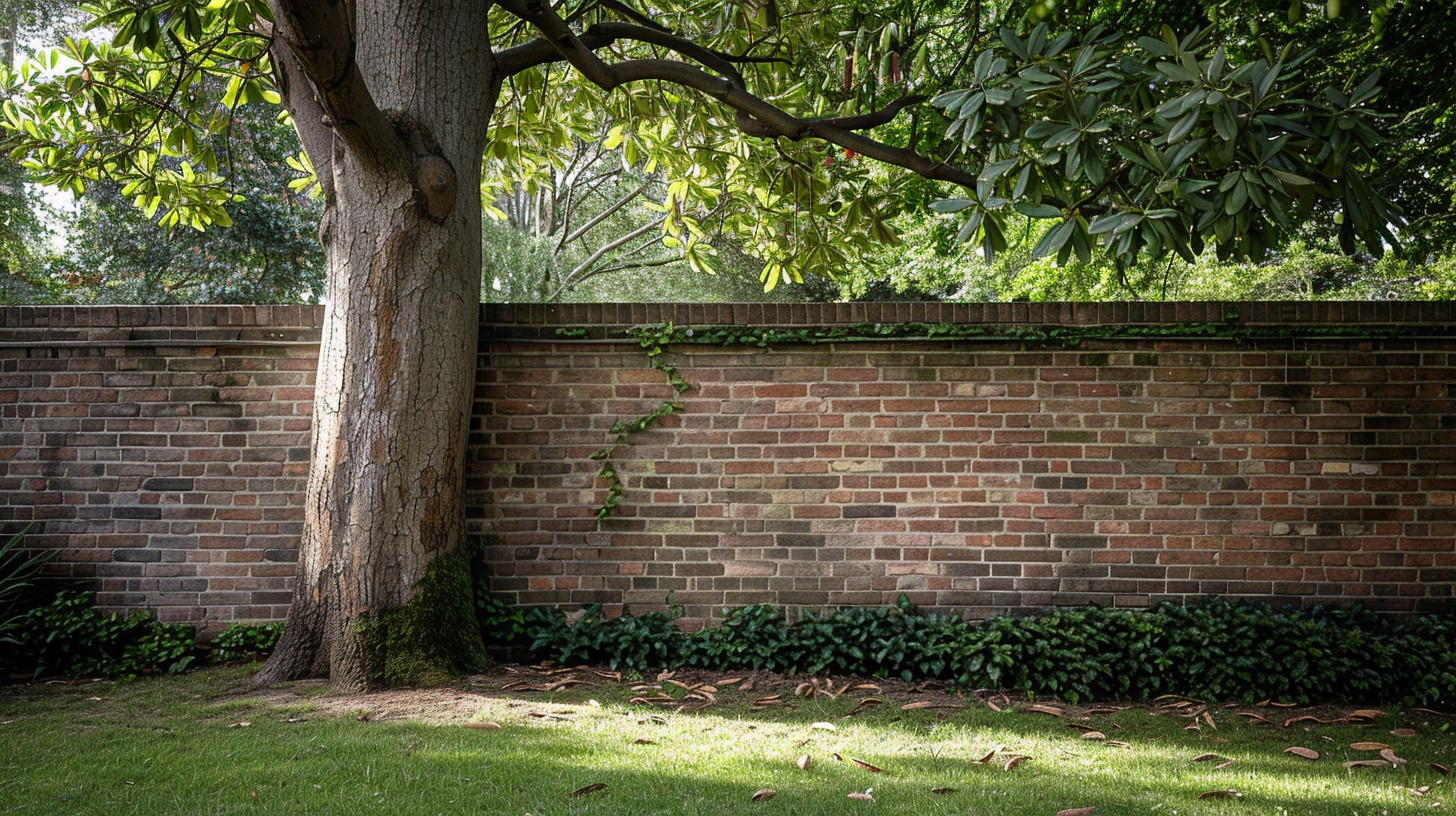
A branch from next door’s sycamore has been creeping over your fence for three years. Last autumn it shed a carpet of leaves across your lawn and cracked a section of guttering on its way down. You have mentioned it twice. Nothing has happened. You are wondering whether you are entitled to do something about it yourself – and, if so, how far the law actually allows you to go.
This situation is one of the most common points of friction in London’s densely housed residential neighbourhoods, and East London is no exception. Mature trees planted decades ago in modest terraced gardens have grown well beyond their original boundaries, and the legal and practical questions they raise are ones that qualified tree surgeons are asked to navigate on a regular basis. The answers are more nuanced than most homeowners expect – and getting them wrong, in either direction, can have consequences ranging from a damaged neighbourly relationship to a criminal prosecution.
What the Law Actually Says About Overhanging Trees
Encroachment, Nuisance and the Boundary Line
English law treats an overhanging tree branch as a form of encroachment – a physical intrusion by one person’s property into the airspace of another. This is established in common law and has been consistently upheld in case law over many decades. The principle is straightforward: the owner of a tree is responsible for the entire tree, including any parts of it that extend beyond their own boundary. If those overhanging portions cause damage, obstruct light, block gutters or interfere with the use and enjoyment of a neighbouring property, they may constitute a legal nuisance.
It is worth being clear about what this means practically. The tree’s owner does not automatically commit a legal wrong simply by having branches that overhang a neighbouring garden. Encroachment alone – without damage or material interference – does not typically give rise to a successful claim in nuisance. What it does give rise to is the right of abatement.
The Right of Abatement – What It Is and What It Is Not
Cutting Back to the Boundary: Your Entitlement and Its Limits
The right of abatement is a longstanding common law principle that entitles a property owner to take reasonable, self-help steps to remove a nuisance affecting their land – without needing the other party’s consent and without needing to go through the courts. Applied to overhanging trees, it means you are legally entitled to cut back branches that cross your boundary, but only to the boundary line itself. Not further.
That final point is critical and frequently misunderstood. The right of abatement does not entitle you to cut the tree back to what you consider a reasonable shape, or to a point that satisfies your aesthetic preferences, or to the extent necessary to prevent future regrowth. It entitles you to remove the encroachment – the portion of the tree that is physically within your airspace – and nothing more. Any cut must be made at or within your boundary line.
This has a direct practical consequence for how the work should be carried out. A clean, considered cut to a suitable lateral – made at the boundary, following sound arboricultural practice – is both legally defensible and better for the long-term health of the tree. Indiscriminate cutting that damages the structural integrity of the tree, or that extends beyond the boundary out of convenience or frustration, exposes you to a counterclaim from your neighbour.
Who Owns the Cut Material
A Point of Law That Surprises Most Homeowners
Here is the aspect of the right of abatement that catches almost everyone off guard: when you cut back overhanging branches – even branches that have been causing you direct inconvenience and material damage – the cut material legally belongs to your neighbour. You are not entitled to keep it, use it, compost it or dispose of it without first offering it back.
In practice, many neighbours are perfectly content to waive this entitlement, particularly where the material involved is a quantity of small brash and leaf litter rather than usable timber. But the legal position is clear, and it applies regardless of how unreasonable or unhelpful your neighbour has been about the situation. Before disposing of any cut material, notify your neighbour and offer its return. If they decline – which they are entitled to do, and frequently will – you can then dispose of it lawfully.
The same principle applies to fruit. If the overhanging branches produce apples, pears or any other fruit that falls into your garden, that fruit belongs to the tree’s owner. Harvesting it without permission is technically theft, regardless of how inconvenient the tree has been.
Tree Preservation Orders, Conservation Areas and Why They Change Everything
The Legal Limits on What You Can Do – Even on Your Own Side of the Fence
The right of abatement operates within the general framework of English property law – but it does not override planning legislation, and this is where many London homeowners run into serious difficulty.
If the overhanging tree is protected by a Tree Preservation Order, or if it stands within a designated Conservation Area, the restrictions imposed by planning law apply to the tree regardless of where the branches in question are located. Critically, those restrictions apply to you as much as to your neighbour. Cutting back the branches of a TPO-protected tree – even branches that overhang your own garden, even under the right of abatement – requires prior written consent from the local planning authority. In Tower Hamlets, as across all London boroughs, carrying out work on a TPO tree without consent is a criminal offence carrying fines of up to £20,000.
Conservation Area controls require a minimum 28-day written notification to the council before any works begin. The council may use this period to impose a TPO if it judges the tree to be of sufficient amenity value. In an area such as Poplar – where Conservation Area designations cover significant portions of the Victorian and Edwardian residential street fabric – this is far from a remote possibility.
Before touching a single branch on a neighbouring tree, establish whether it is subject to a TPO or falls within a Conservation Area. Both can be verified through the local planning authority’s public register, and a qualified arborist can carry out this check as a standard preliminary step.
When the Overhanging Tree Causes Actual Damage
Your Options Beyond Self-Help
Where an overhanging or encroaching tree causes direct, quantifiable damage to your property – cracked guttering, damaged roofing, subsidence attributable to root intrusion, structural interference with walls or outbuildings – you are not limited to the right of abatement. You may have a claim in negligence against the tree owner, provided that they were aware, or ought reasonably to have been aware, of the risk posed by the tree and failed to take reasonable steps to address it.
The threshold for negligence in this context is not simply that the tree has caused damage. You need to establish that the tree owner had knowledge of the problem – either because they were directly notified, or because the condition of the tree was sufficiently obvious that any reasonable person would have recognised the risk. This is why written communication with your neighbour, and keeping a record of it, matters considerably. A letter, an email or a documented conversation that puts the neighbour formally on notice of the issue is material evidence if a subsequent legal dispute arises.
Where root intrusion is involved – a distinct but related issue, particularly relevant to London’s older clay subsoil and its susceptibility to shrinkage – the legal position is similar but the evidence requirements are more demanding. Root causation in subsidence cases typically requires specialist investigation and arboricultural or structural engineering reports.
The Practical and Neighbourly Approach – Why It Usually Beats the Legal One
Communication, Documentation and Professional Involvement
The right of abatement, the law of nuisance and the principles governing tree owner liability are all useful frameworks to understand – but invoking them formally, through solicitors or the courts, is rarely the most effective first step. In the compact residential neighbourhoods of East London, where gardens back onto one another at close quarters and relations between neighbours have long-term consequences, a proportionate and well-communicated approach almost always produces better outcomes than an adversarial one.
A written note – delivered by hand or by post – that clearly identifies the overhanging branches, describes any damage they are causing, refers politely to the legal position and proposes a specific, practical remedy gives your neighbour the opportunity to respond constructively. Many do. Where the response is positive, involving a qualified tree surgeon to carry out the work collaboratively – with both parties agreeing on the specification and sharing costs where appropriate – is both the most effective and the most professionally credible route.
Where communication fails, and where the situation is causing ongoing damage or safety concerns, a formal letter before action – setting out the legal position clearly and documenting your prior attempts to resolve the matter – is the appropriate escalation, and one that frequently produces a resolution without court proceedings.
Conclusion
The legal position on overhanging trees in London is well established but not simple. The right of abatement entitles you to act within your boundary – no further. Planning law may restrict even that entitlement where protected trees are involved. And the ownership of cut material, the rules around fruit and the conditions under which negligence claims arise all operate in ways that differ from common assumption. Understanding the framework clearly, documenting your communications carefully and involving qualified professionals at the right moment are the tools that turn a frustrating neighbourly dispute into a managed, resolved situation.
